 Image 1 of 4
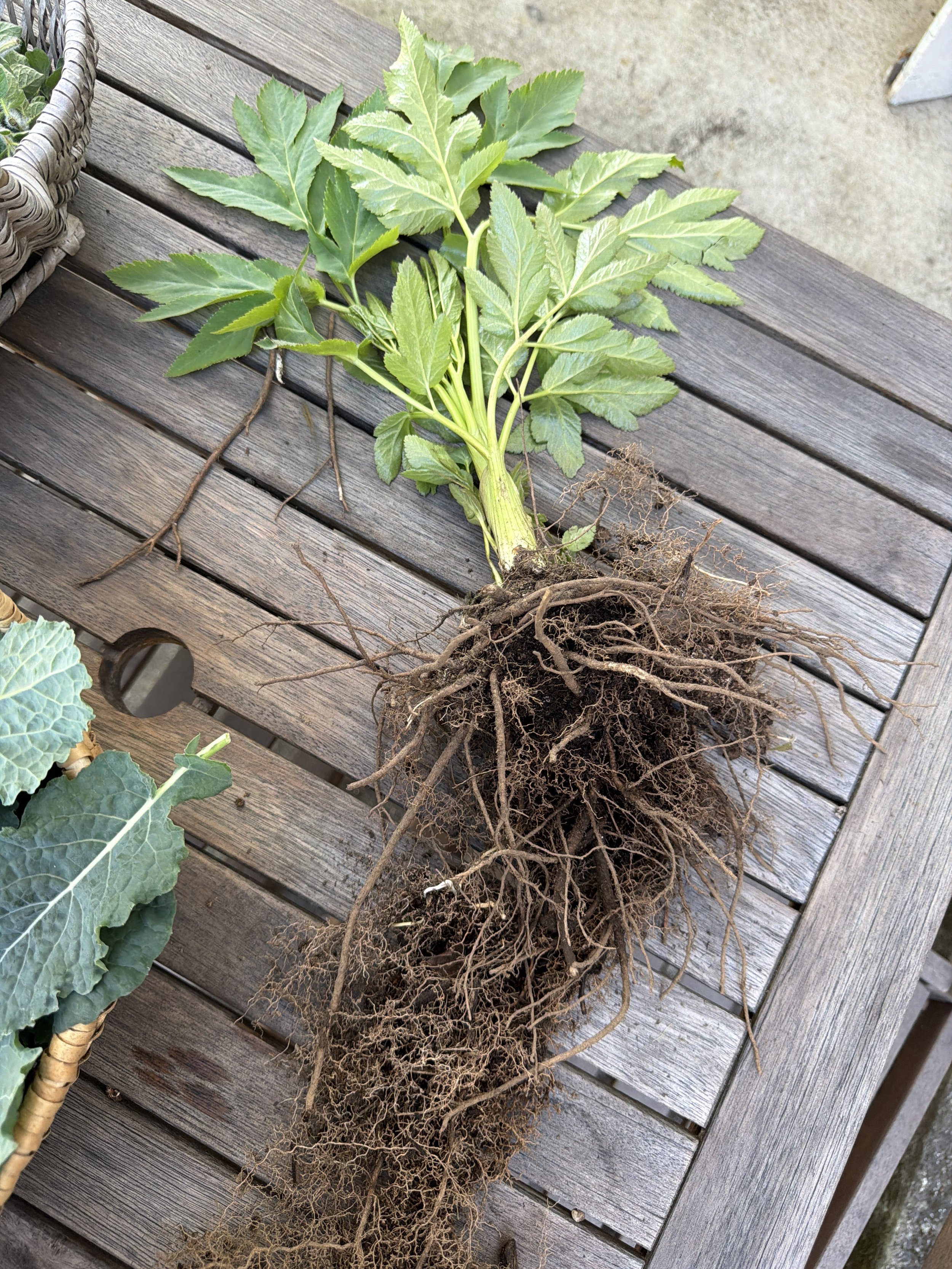 Image 2 of 4
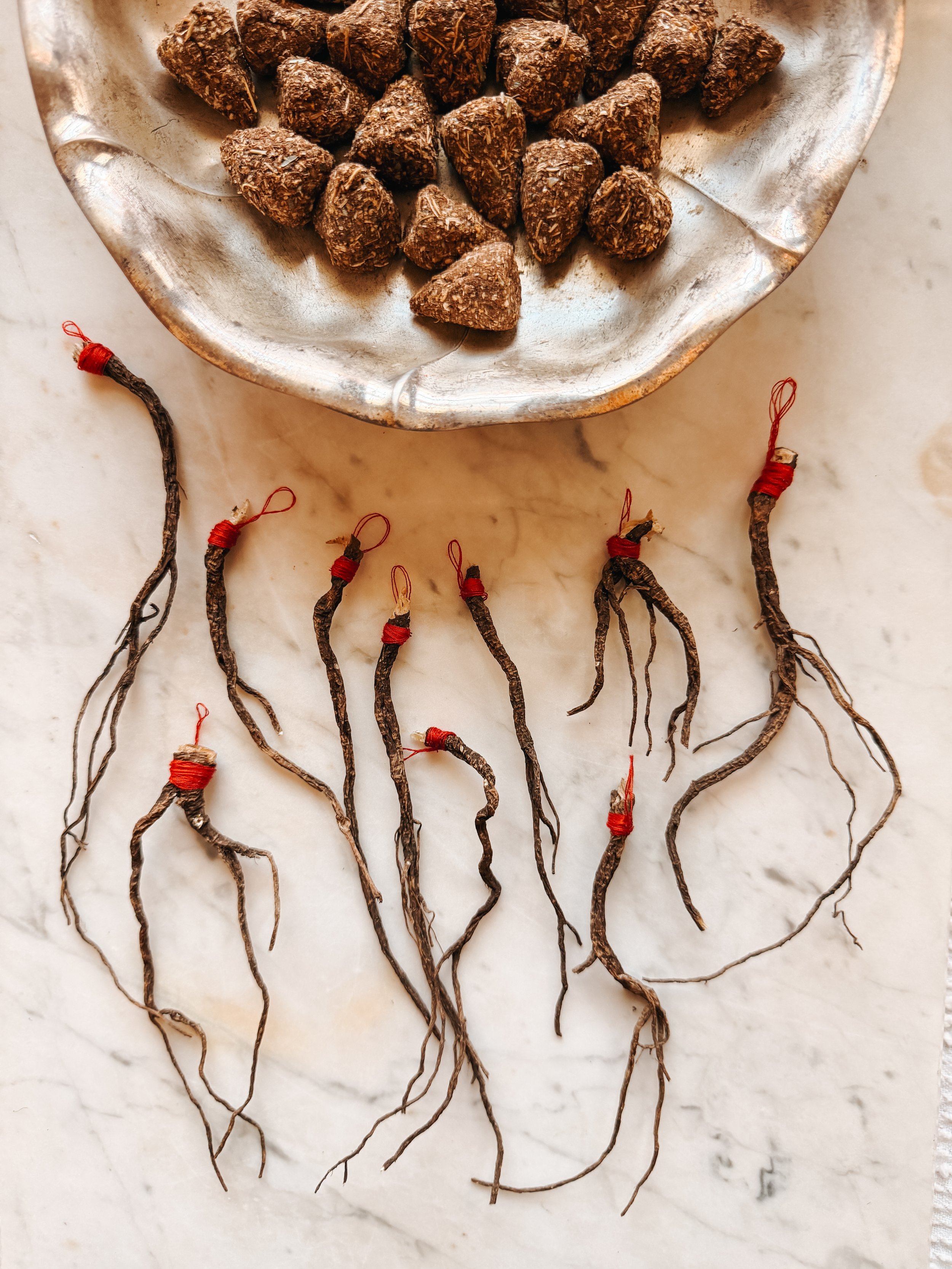 Image 3 of 4
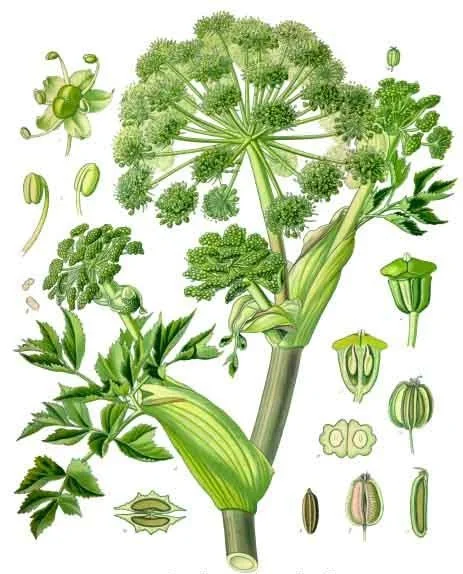 Image 4 of 4
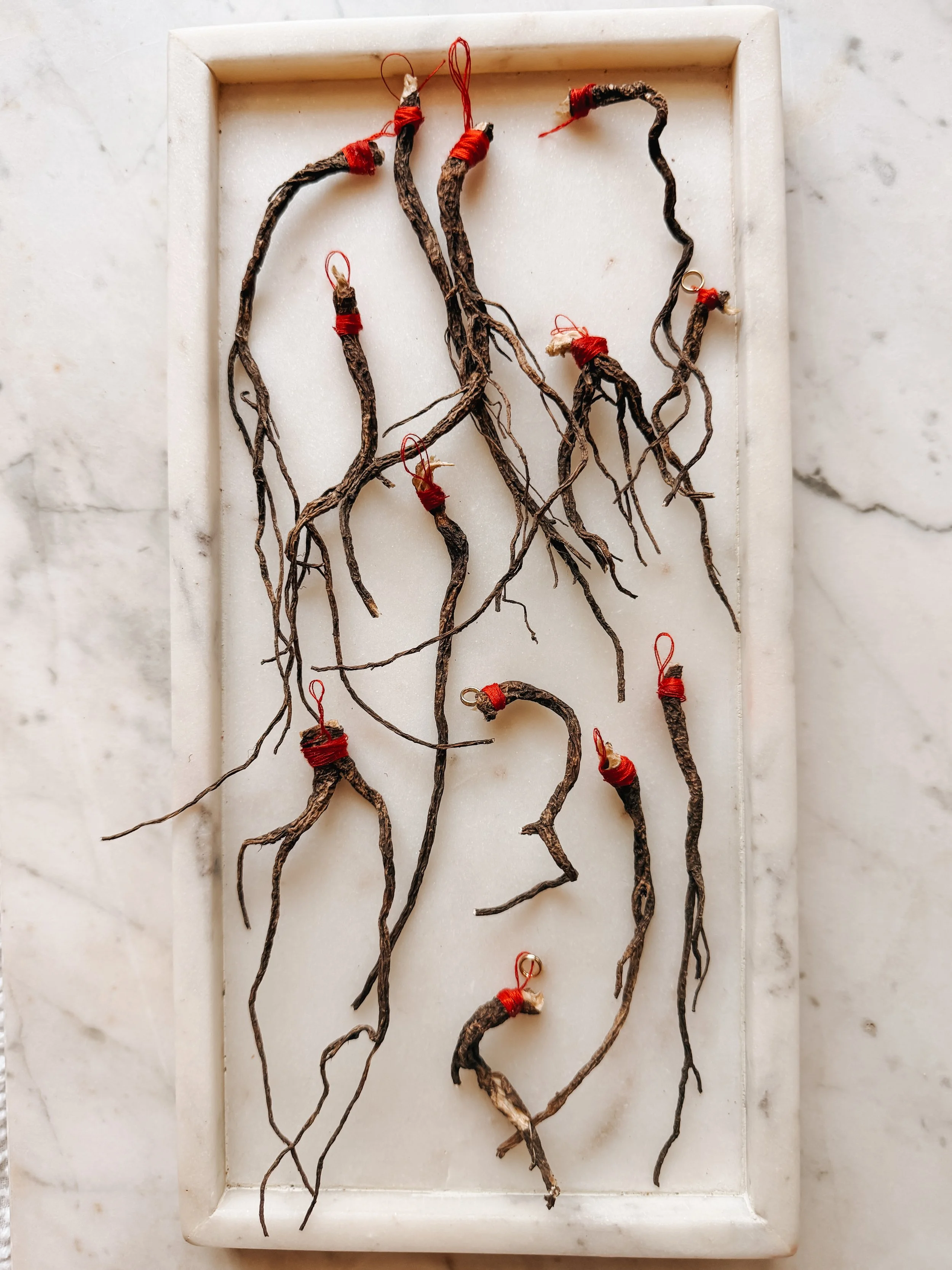
Crafted from my own angelica plant. You receive one of these roots I choose, bound in red thread. They are delightfully witchy.
Can be carried, worn, burned, hung near doorways, or even tinctured. The smell is very sweet and earthy. Roots are fragile.
Wild, branching pieces of dried angelica root, each one bound in red thread and hung as a small talisman. These roots were called “Root of the Holy Ghost” and have long taproots. After harvest, they become objects of protection, luck, and remembrance.
Angelica has a long and storied place in European herbal tradition. In medieval herbals it was known as Angelica archangelica, a name tied to the belief that the plant was revealed by an angel as a remedy during times of plague. Monastic gardens across Northern Europe cultivated it not only as medicine but as a spiritual safeguard. Roots were worn on the body, hung in doorways, or carried during travel to ward off illness, ill fortune, and unseen forces.
In early modern folk practice, angelica root was considered one of the great protective herbs. It appears in grimoires and household lore as a defense against witchcraft, malign spirits, and contagion. In parts of Scandinavia and the British Isles, pieces of the root were chewed or carried for strength and resilience. Its strong, aromatic bitterness linked it to purification, both physical and spiritual.
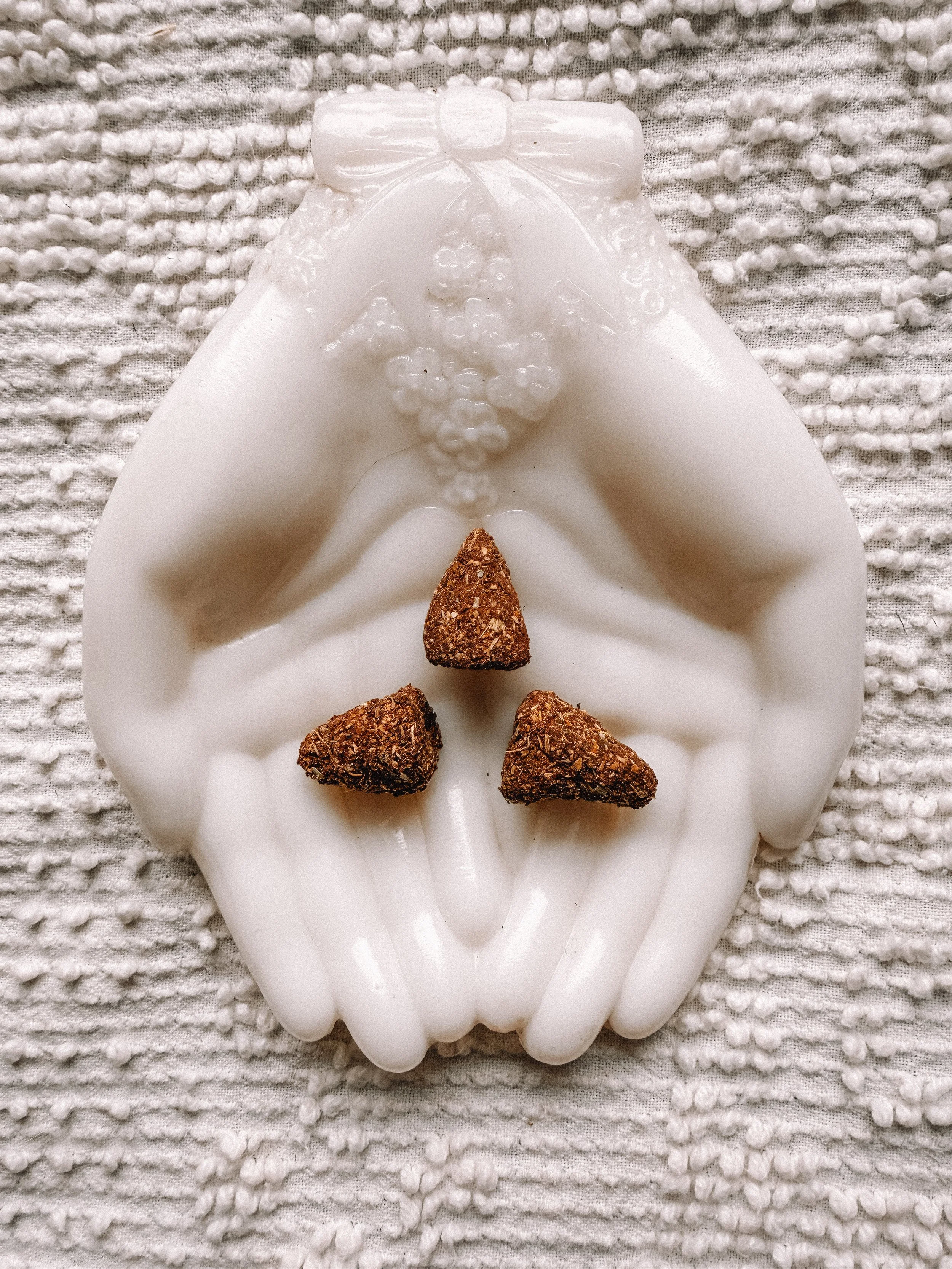
Burned as incense, angelica root produces a deep, earthy smoke with a slightly sweet, musky edge. Historically this smoke was used to cleanse spaces, especially during seasonal transitions or times of sickness. The root also appears in early European distillation traditions, later becoming a key botanical in liqueurs and medicinal spirits, valued for its warming and fortifying qualities.
Each charm is one of a kind.
Carry one on your person, hang near an entryway, or keep on an altar or work space. These are offered as art objects and ritual companions, rooted in the long history of angelica as a guardian plant.
Crafted from my own angelica plant. You receive one of these roots I choose, bound in red thread. They are delightfully witchy.
Can be carried, worn, burned, hung near doorways, or even tinctured. The smell is very sweet and earthy. Roots are fragile.
Wild, branching pieces of dried angelica root, each one bound in red thread and hung as a small talisman. These roots were called “Root of the Holy Ghost” and have long taproots. After harvest, they become objects of protection, luck, and remembrance.
Angelica has a long and storied place in European herbal tradition. In medieval herbals it was known as Angelica archangelica, a name tied to the belief that the plant was revealed by an angel as a remedy during times of plague. Monastic gardens across Northern Europe cultivated it not only as medicine but as a spiritual safeguard. Roots were worn on the body, hung in doorways, or carried during travel to ward off illness, ill fortune, and unseen forces.
In early modern folk practice, angelica root was considered one of the great protective herbs. It appears in grimoires and household lore as a defense against witchcraft, malign spirits, and contagion. In parts of Scandinavia and the British Isles, pieces of the root were chewed or carried for strength and resilience. Its strong, aromatic bitterness linked it to purification, both physical and spiritual.
Burned as incense, angelica root produces a deep, earthy smoke with a slightly sweet, musky edge. Historically this smoke was used to cleanse spaces, especially during seasonal transitions or times of sickness. The root also appears in early European distillation traditions, later becoming a key botanical in liqueurs and medicinal spirits, valued for its warming and fortifying qualities.
Each charm is one of a kind.
Carry one on your person, hang near an entryway, or keep on an altar or work space. These are offered as art objects and ritual companions, rooted in the long history of angelica as a guardian plant.