 Image 1 of 1
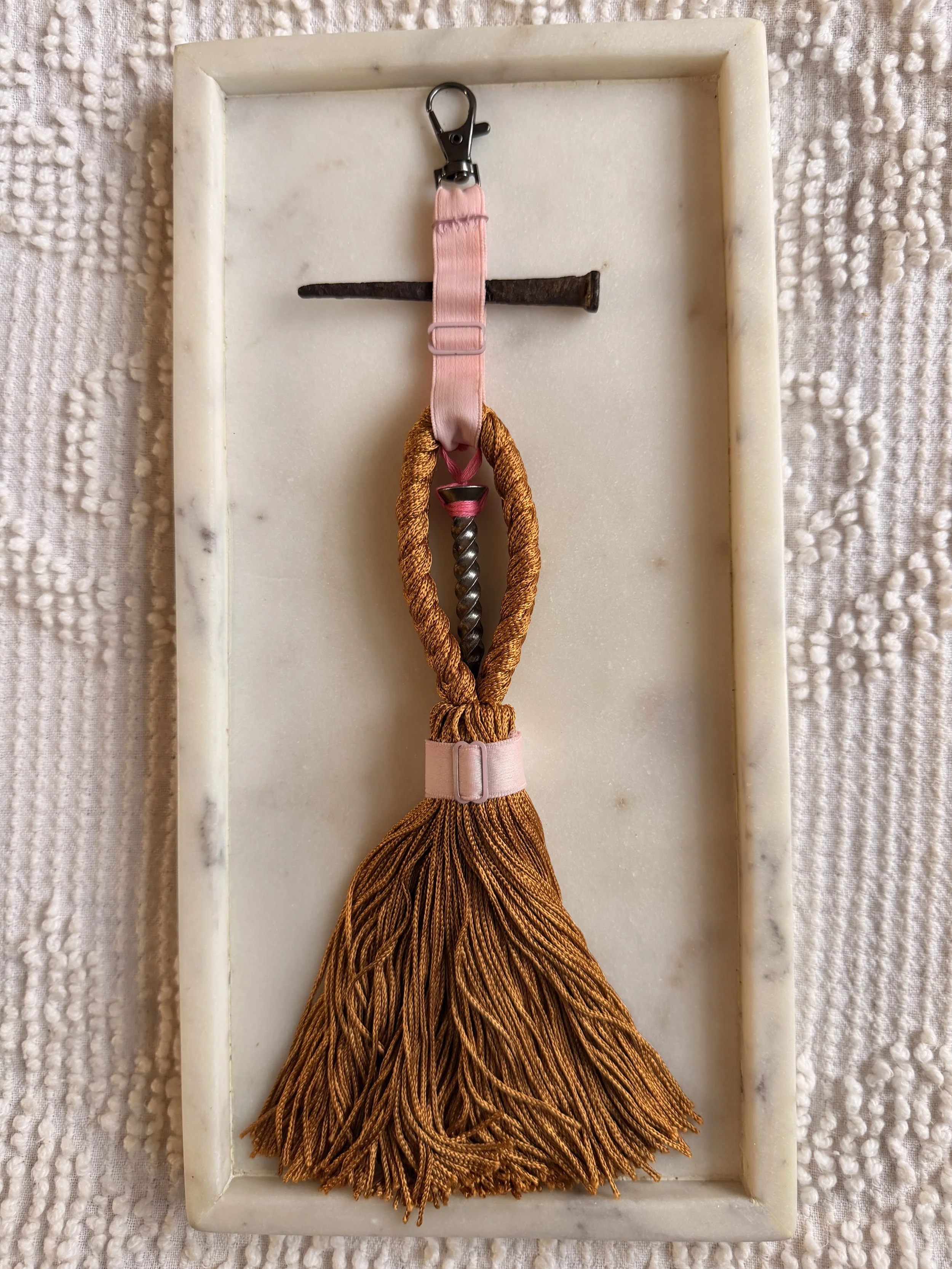
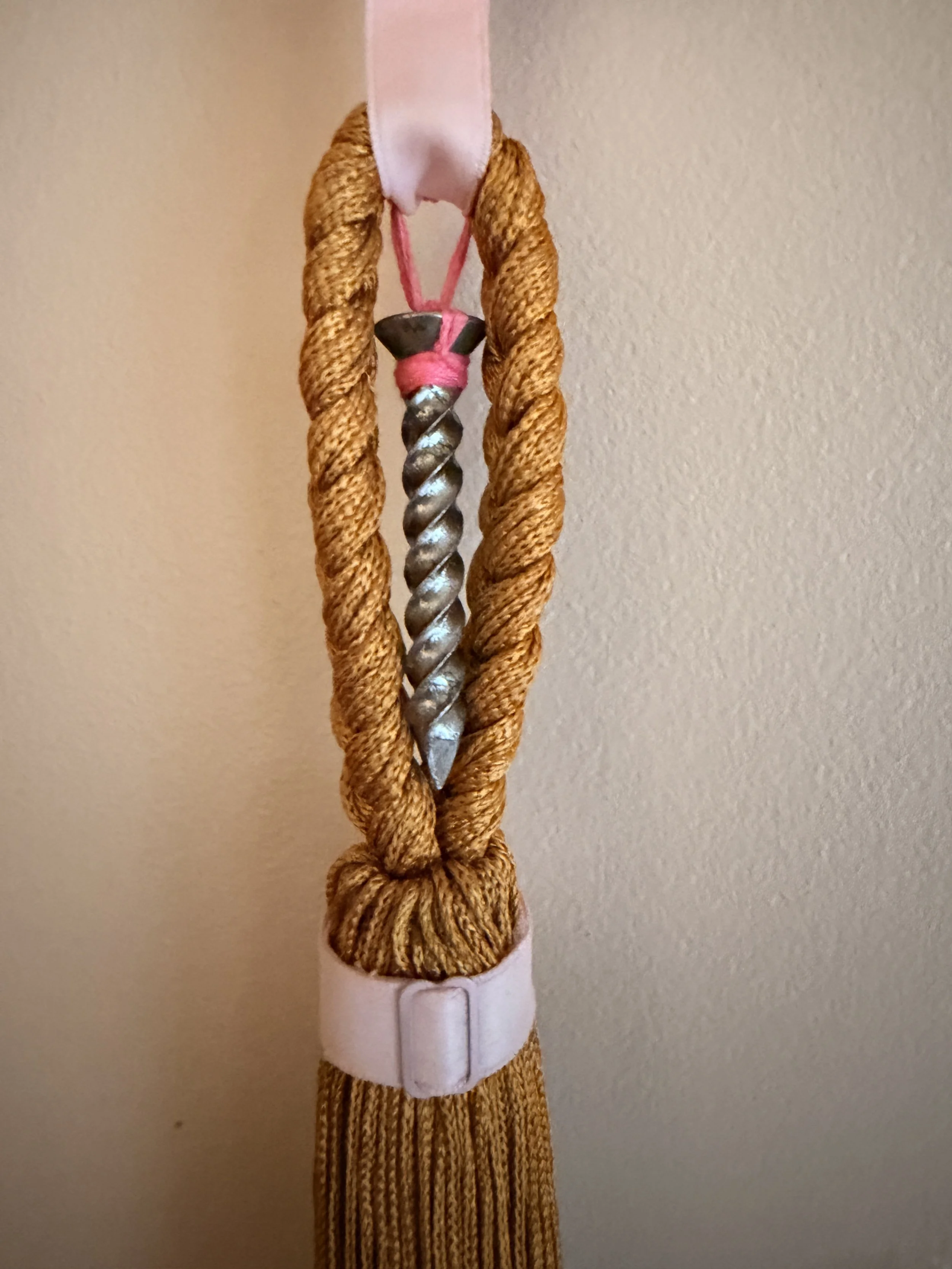
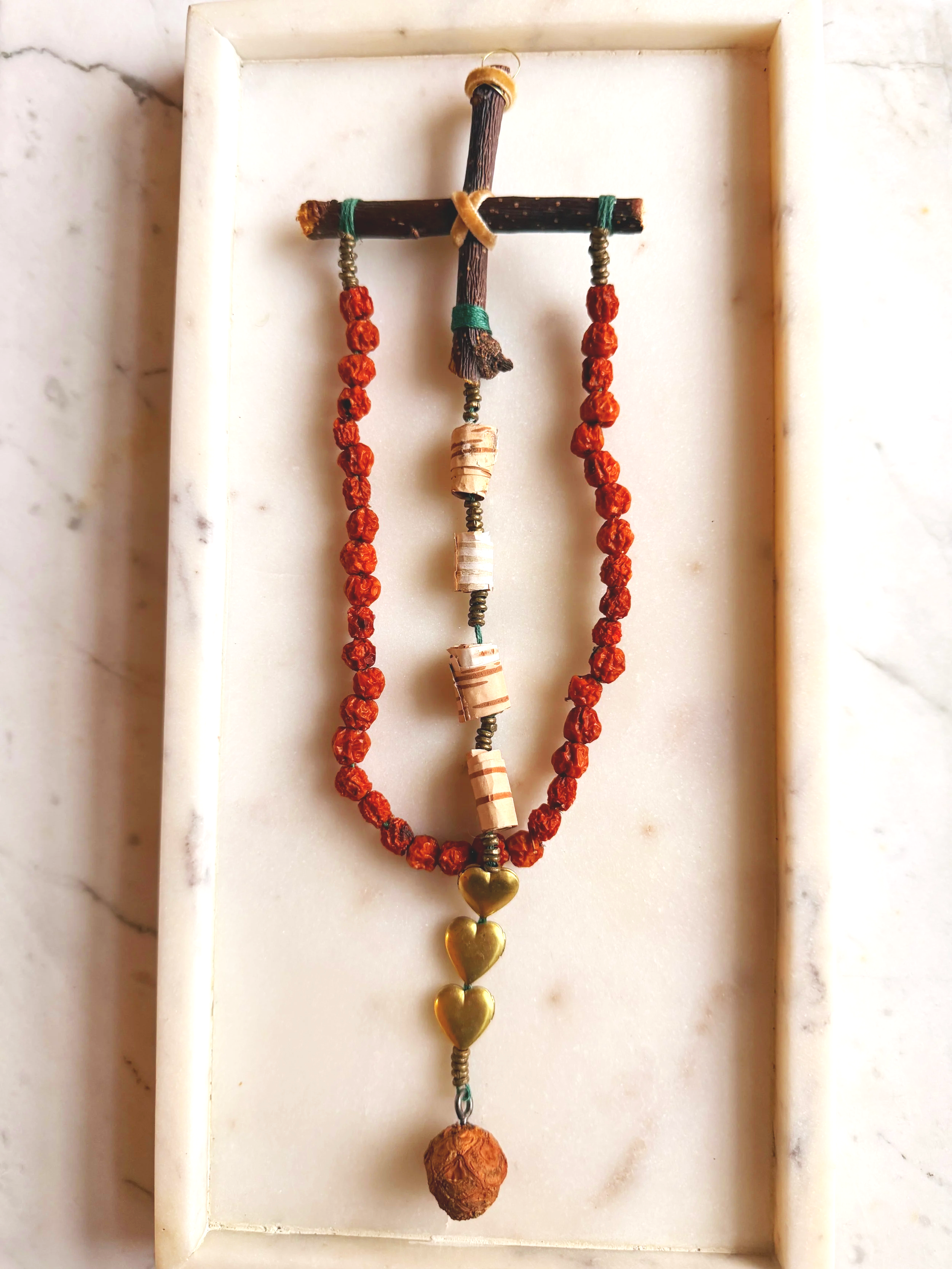
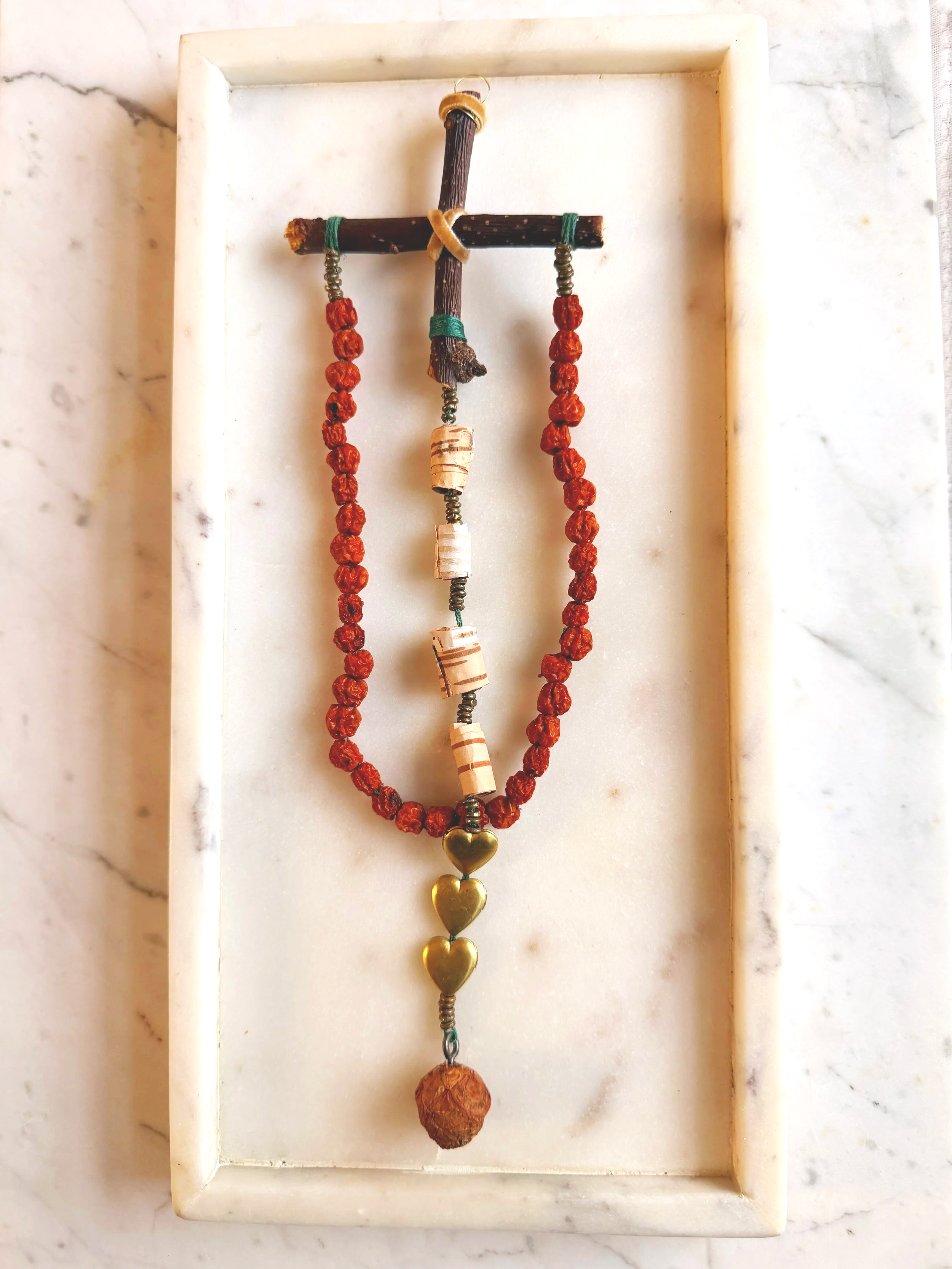
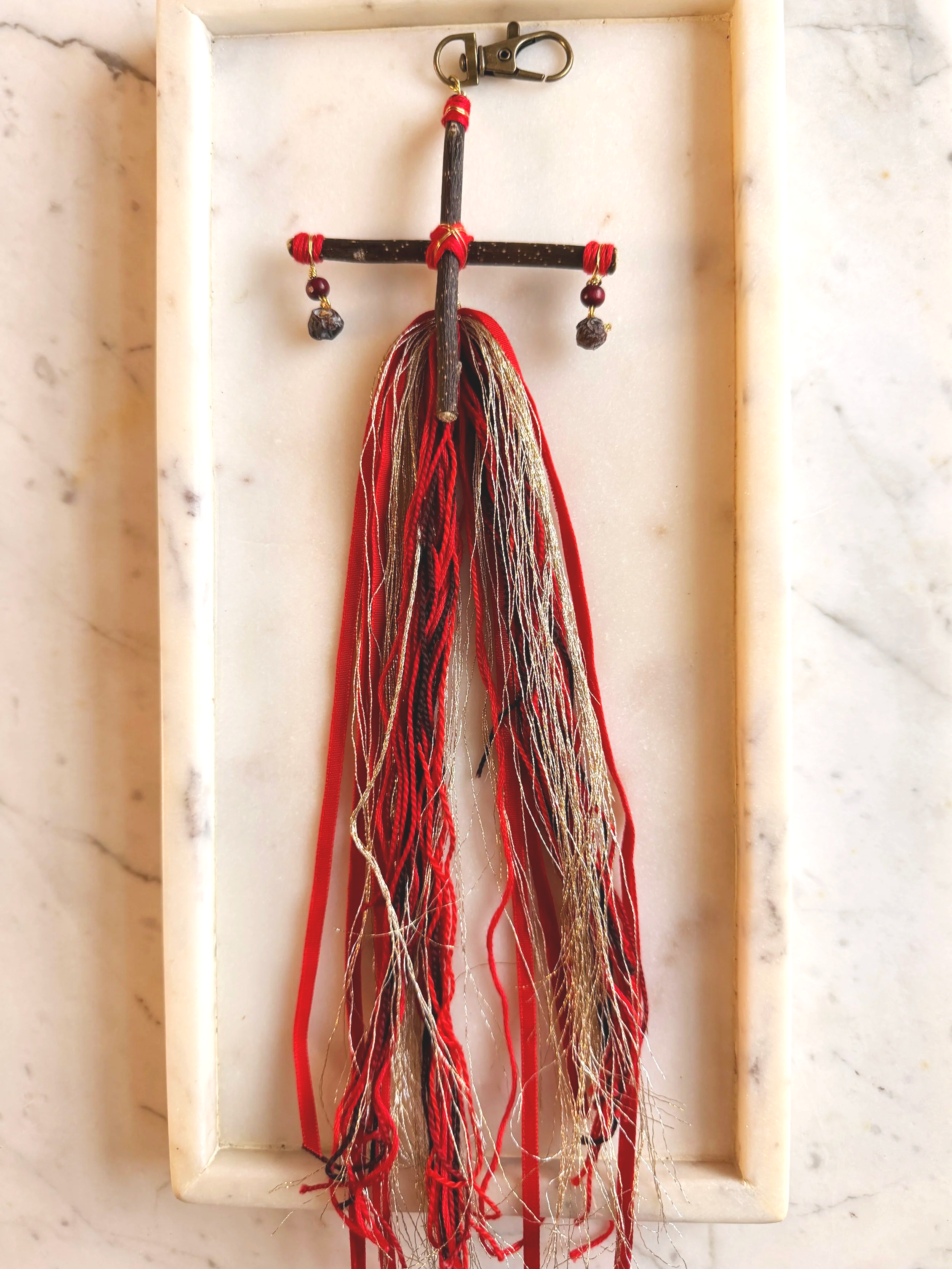
Cross made of spotted applewood with red and gold threads, velvet ribbon, wood beads and juniper berries. Measures approx. 10” long. Wired attached clasp. Can be used as a bag charm or wall art. For protection.
Apple trees were:
wedding trees, planted to bless a marriage
guardian trees, planted near the house to repel illness
believed to house ancestors (particularly stillborn or unbaptized children in older lore)
Applewood was used for:
divination (especially for finding lost cattle or choosing wedding days)
protective stakes around gardens and barns
charms for female fertility: apple blossoms were placed in the bed of a bride
The apple was deeply connected to Idunn, keeper of the apples of immortality.
In some folk magic:
a piece of applewood under the pillow invited drömmar från andra sidan—dreams from the other side.
In Germanic folklore, the apple tree is the Freya tree, tied to:
love magic
protecting children
marital harmony
spring blessings
German folk healers made applewood wands to:
heal warts
cure fevers
direct blessing energy
Burning applewood was believed to:
drive off hexerei (witchcraft)
repel restless spirits
call in benevolent house spirits
In Alpine regions (Austria/Bavaria/Slovenian borderlands):
applewood stakes were used to keep the striga or vampiric night beings at bay.
Apple branches were woven into Perchtenlauf masks and winter charms.
Apple trees were:
planted at the birth of a child
used in Koline (winter slaughter festivals) as purification switches
sacred to žalik žena and other nature spirits
Applewood lore includes:
Applewood rods used by shepherds to protect flocks and lead them safely in spring processions
Love divination done by burning apple twigs and reading their popping or curling
In some regions, three applewood chips were carried as:
a protection charm
a way to ensure luck in travel
a ward against the vedomec (witch-sorcerer)
Apple trees were considered liminal sites.
Applewood uses:
Samhain divination: peeling apples in one long peel and tossing over the shoulder to reveal initials of a future lover
Applewood wands used by cunning folk for healing and spirit communication
Applewood charms hung in cradles to protect children from the Sìth (fae)
Scottish superstition:
Cutting down an old apple tree could anger the spirits and bring misfortune.
Burning applewood at Beltane was a blessing for cattle and milk.
Apples are explicitly linked to the Otherworld (Tír na nÓg).
Ireland’s applewood lore includes:
crane bag myth (an apple branch becoming a magical bag of treasures)
dreaming under an apple tree to receive prophecy
love and truth magic—applewood wands cannot lie
Applewood branches were used to:
protect boundary lines
bless new homes
draw fae beings in or keep them out, depending on the charm
Irish Brehon law listed apple trees as noble trees, with heavy penalties for cutting them.
Cross made of spotted applewood with red and gold threads, velvet ribbon, wood beads and juniper berries. Measures approx. 10” long. Wired attached clasp. Can be used as a bag charm or wall art. For protection.
Apple trees were:
wedding trees, planted to bless a marriage
guardian trees, planted near the house to repel illness
believed to house ancestors (particularly stillborn or unbaptized children in older lore)
Applewood was used for:
divination (especially for finding lost cattle or choosing wedding days)
protective stakes around gardens and barns
charms for female fertility: apple blossoms were placed in the bed of a bride
The apple was deeply connected to Idunn, keeper of the apples of immortality.
In some folk magic:
a piece of applewood under the pillow invited drömmar från andra sidan—dreams from the other side.
In Germanic folklore, the apple tree is the Freya tree, tied to:
love magic
protecting children
marital harmony
spring blessings
German folk healers made applewood wands to:
heal warts
cure fevers
direct blessing energy
Burning applewood was believed to:
drive off hexerei (witchcraft)
repel restless spirits
call in benevolent house spirits
In Alpine regions (Austria/Bavaria/Slovenian borderlands):
applewood stakes were used to keep the striga or vampiric night beings at bay.
Apple branches were woven into Perchtenlauf masks and winter charms.
Apple trees were:
planted at the birth of a child
used in Koline (winter slaughter festivals) as purification switches
sacred to žalik žena and other nature spirits
Applewood lore includes:
Applewood rods used by shepherds to protect flocks and lead them safely in spring processions
Love divination done by burning apple twigs and reading their popping or curling
In some regions, three applewood chips were carried as:
a protection charm
a way to ensure luck in travel
a ward against the vedomec (witch-sorcerer)
Apple trees were considered liminal sites.
Applewood uses:
Samhain divination: peeling apples in one long peel and tossing over the shoulder to reveal initials of a future lover
Applewood wands used by cunning folk for healing and spirit communication
Applewood charms hung in cradles to protect children from the Sìth (fae)
Scottish superstition:
Cutting down an old apple tree could anger the spirits and bring misfortune.
Burning applewood at Beltane was a blessing for cattle and milk.
Apples are explicitly linked to the Otherworld (Tír na nÓg).
Ireland’s applewood lore includes:
crane bag myth (an apple branch becoming a magical bag of treasures)
dreaming under an apple tree to receive prophecy
love and truth magic—applewood wands cannot lie
Applewood branches were used to:
protect boundary lines
bless new homes
draw fae beings in or keep them out, depending on the charm
Irish Brehon law listed apple trees as noble trees, with heavy penalties for cutting them.