 Image 1 of 2
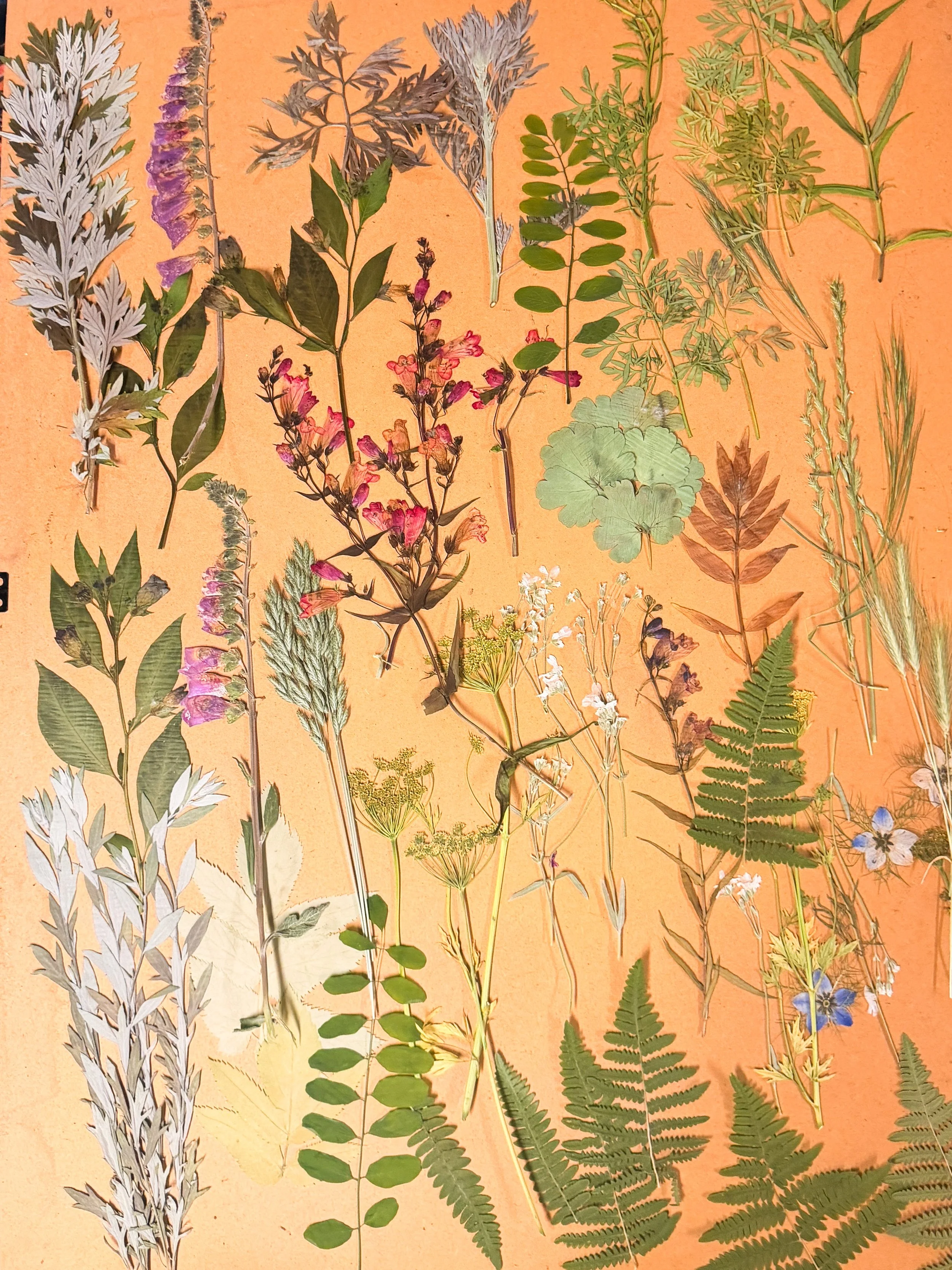 Image 2 of 2
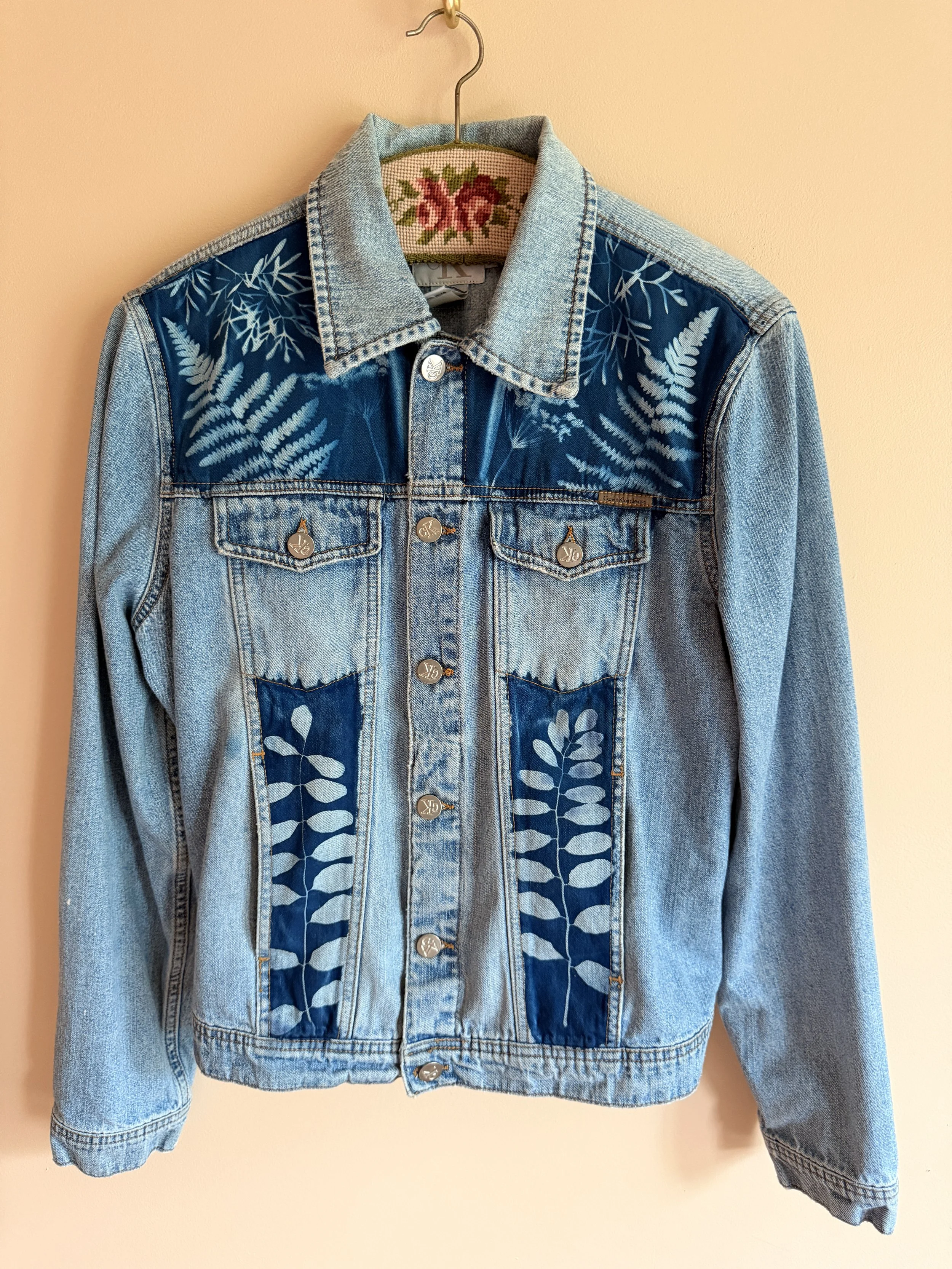
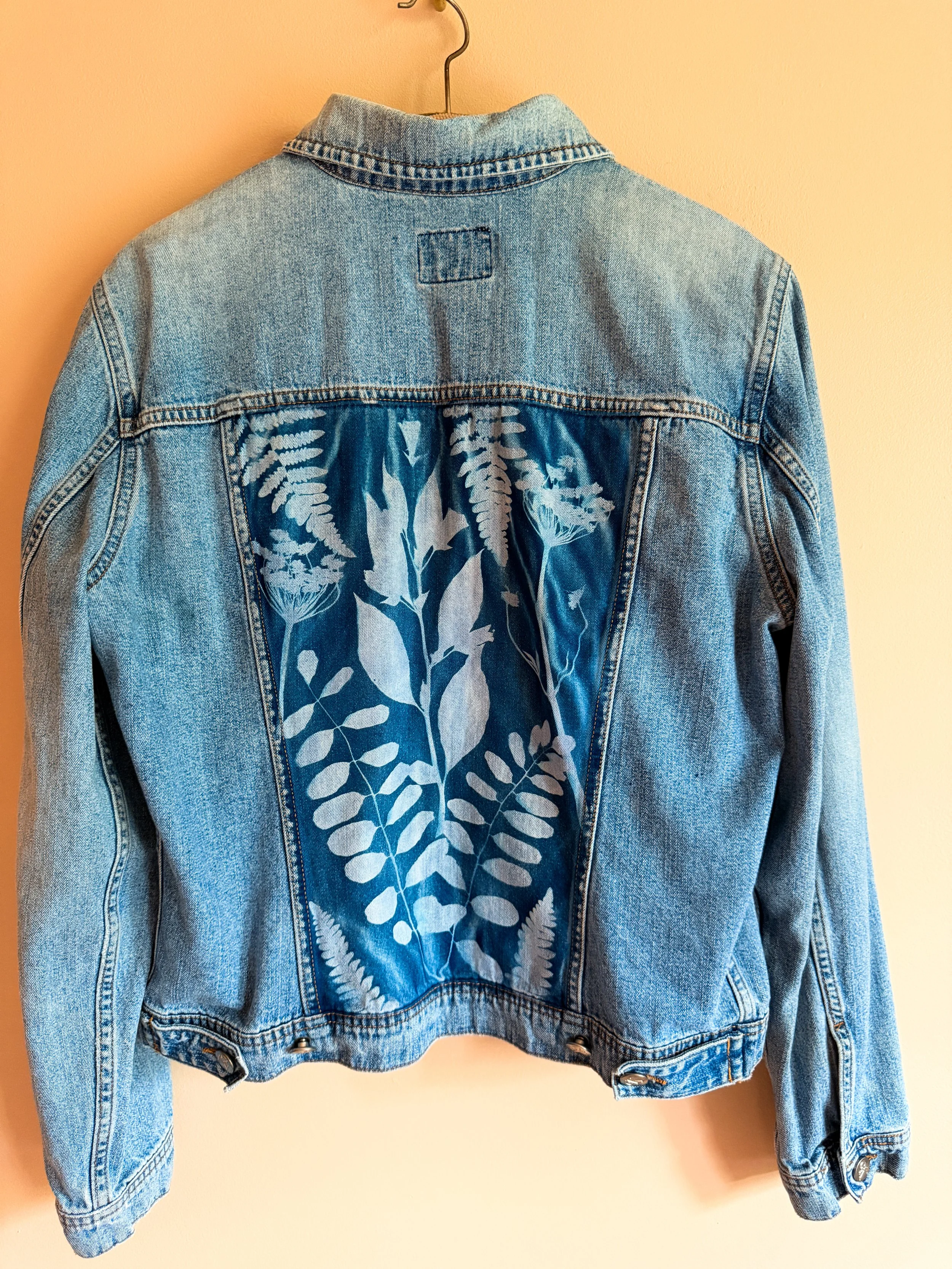
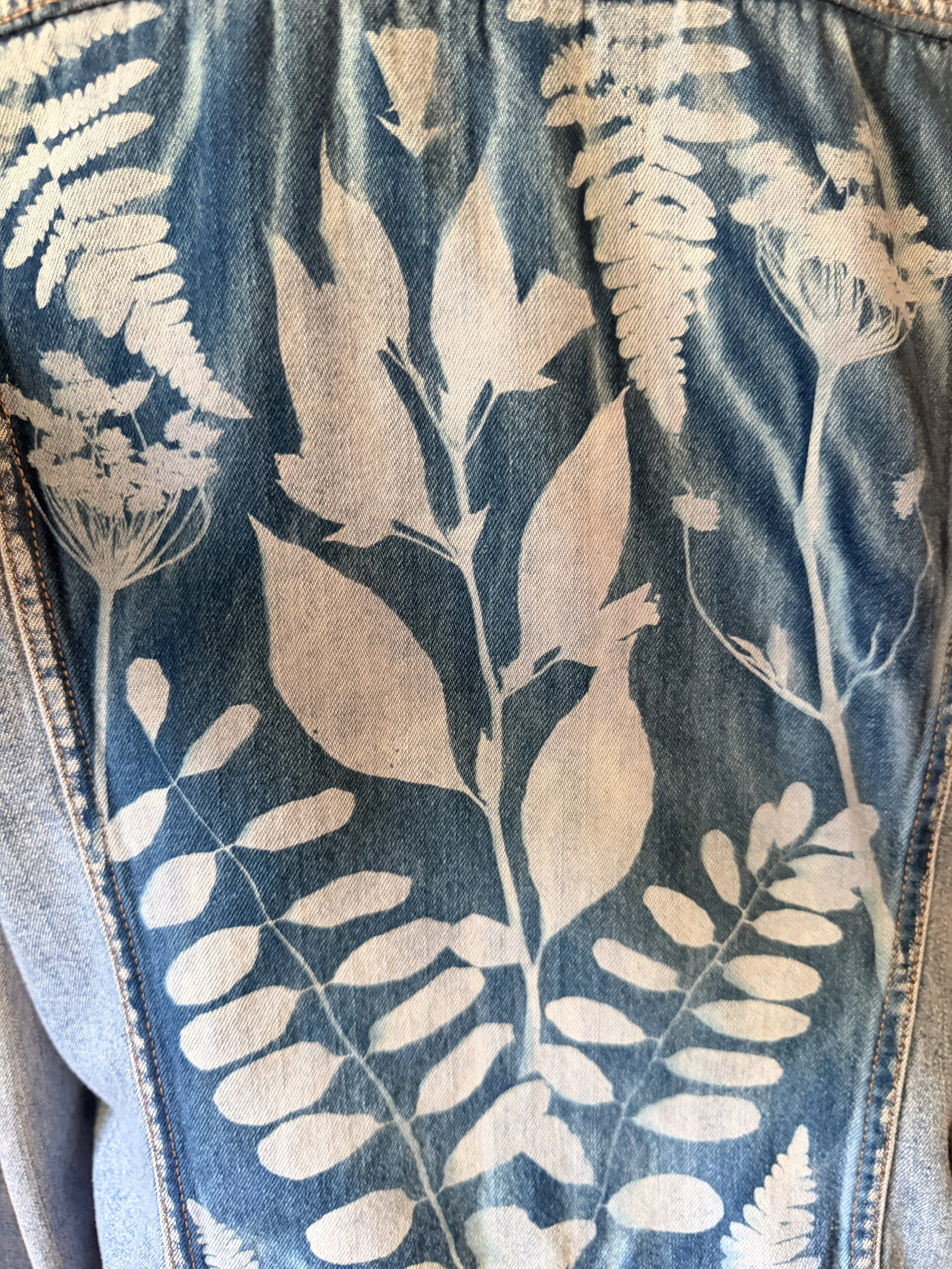
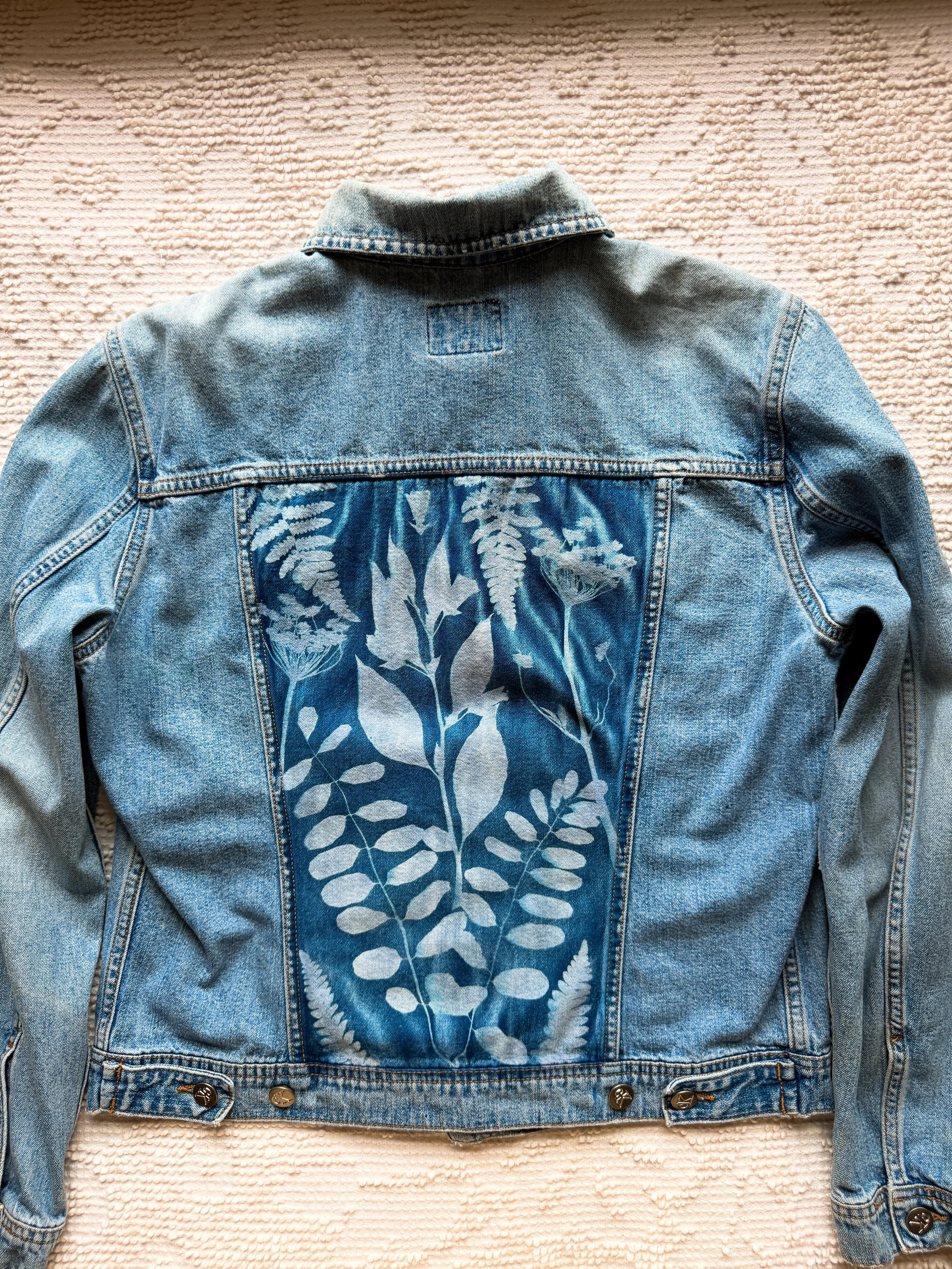
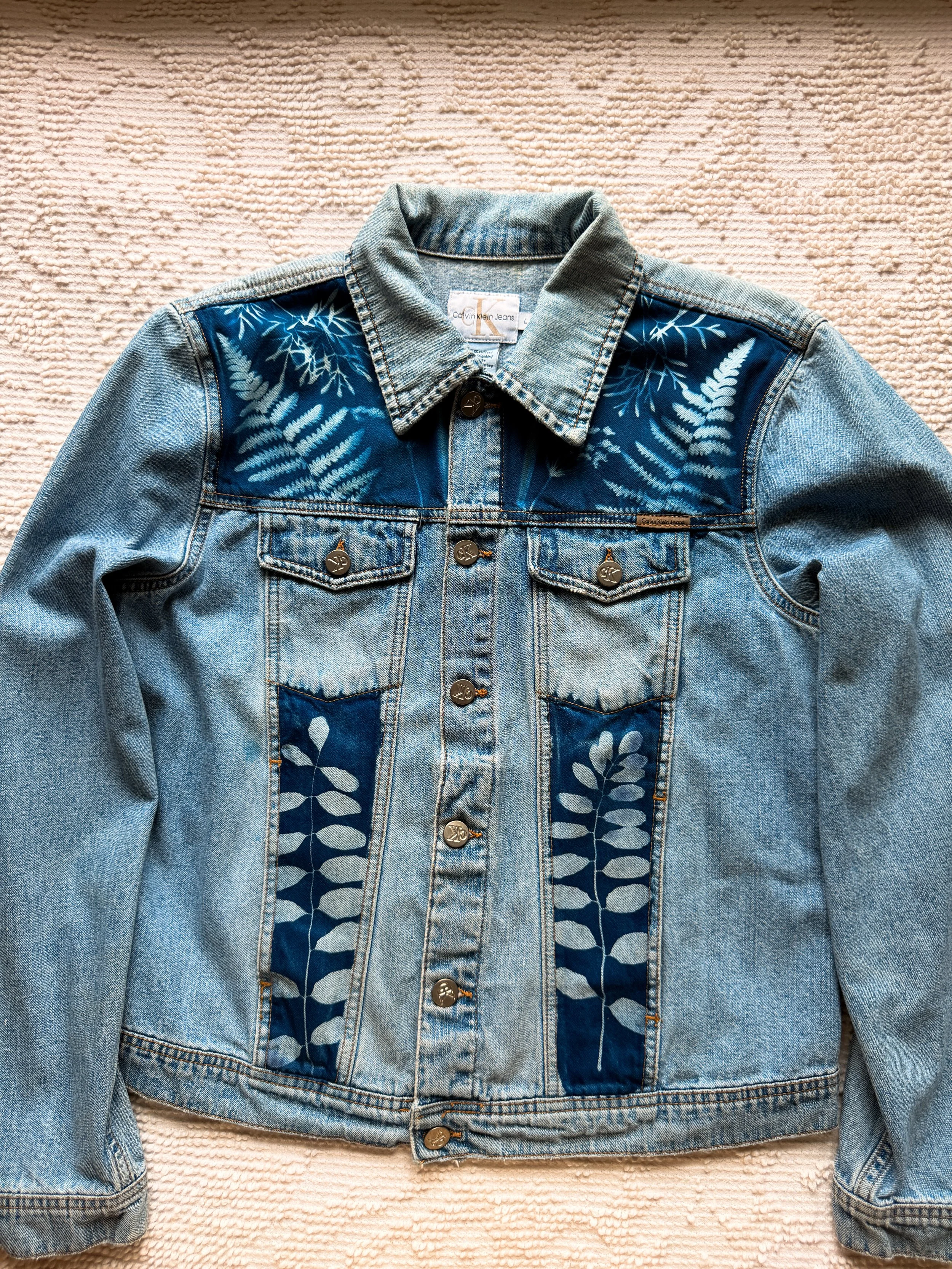
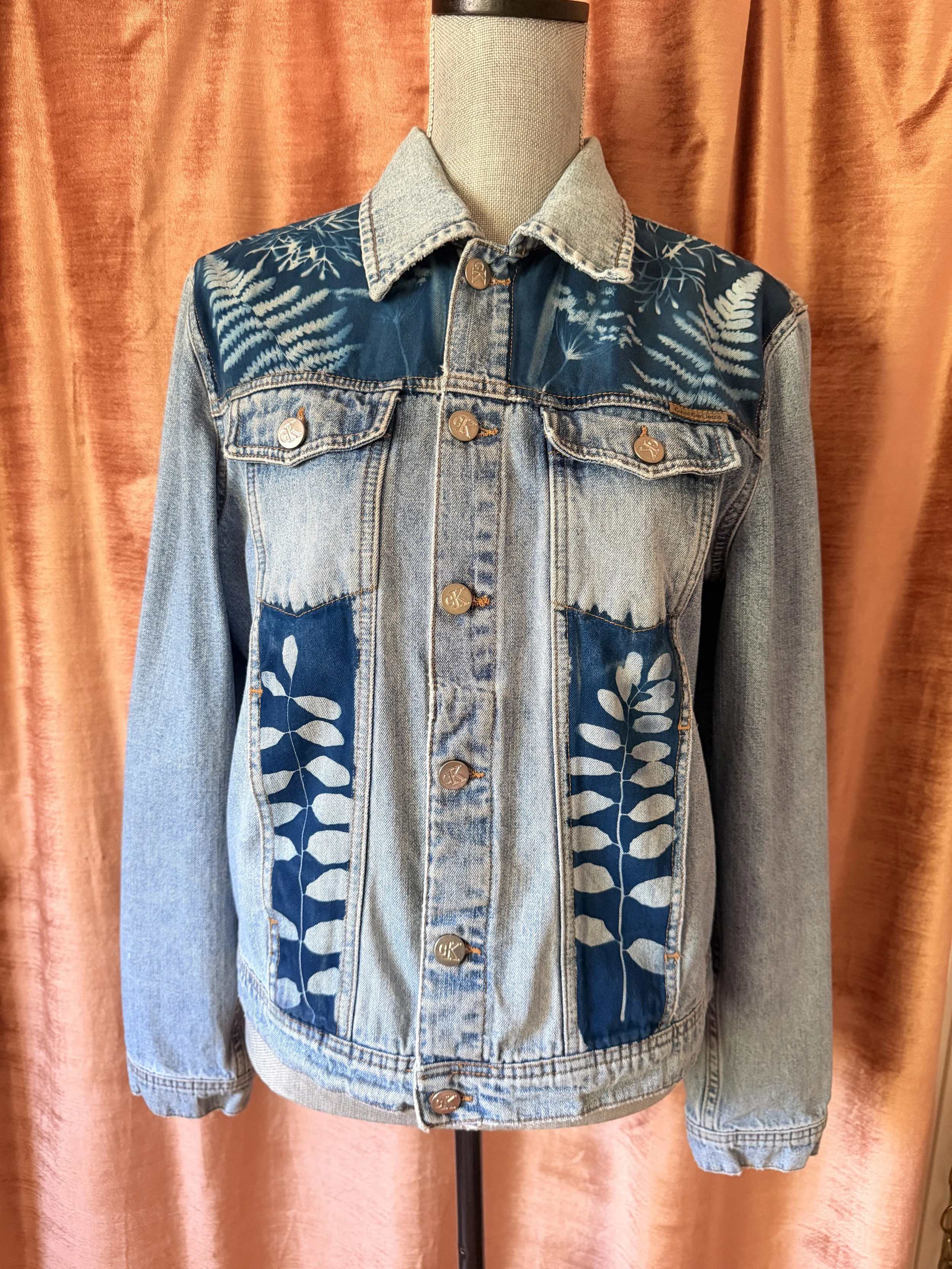
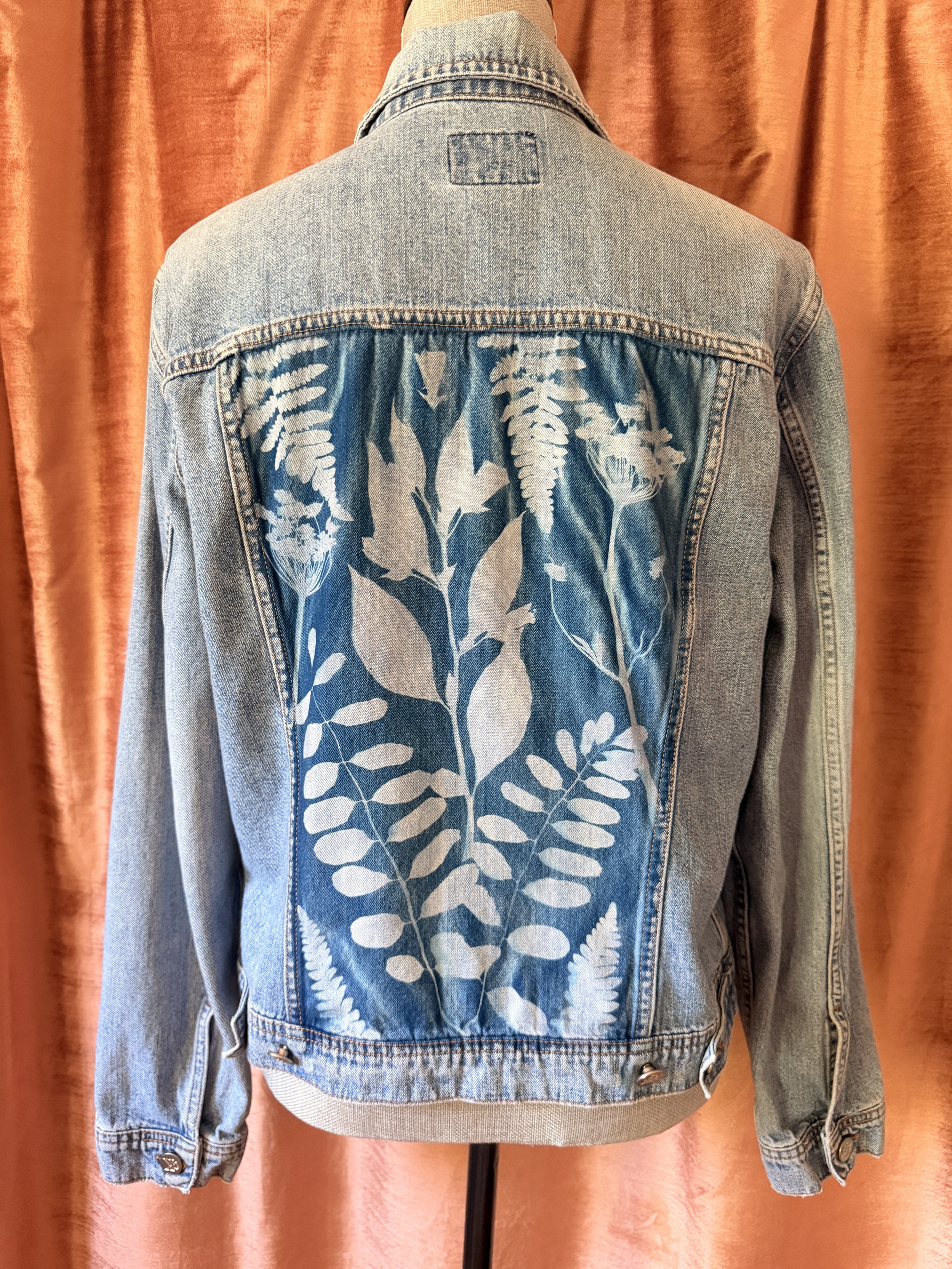
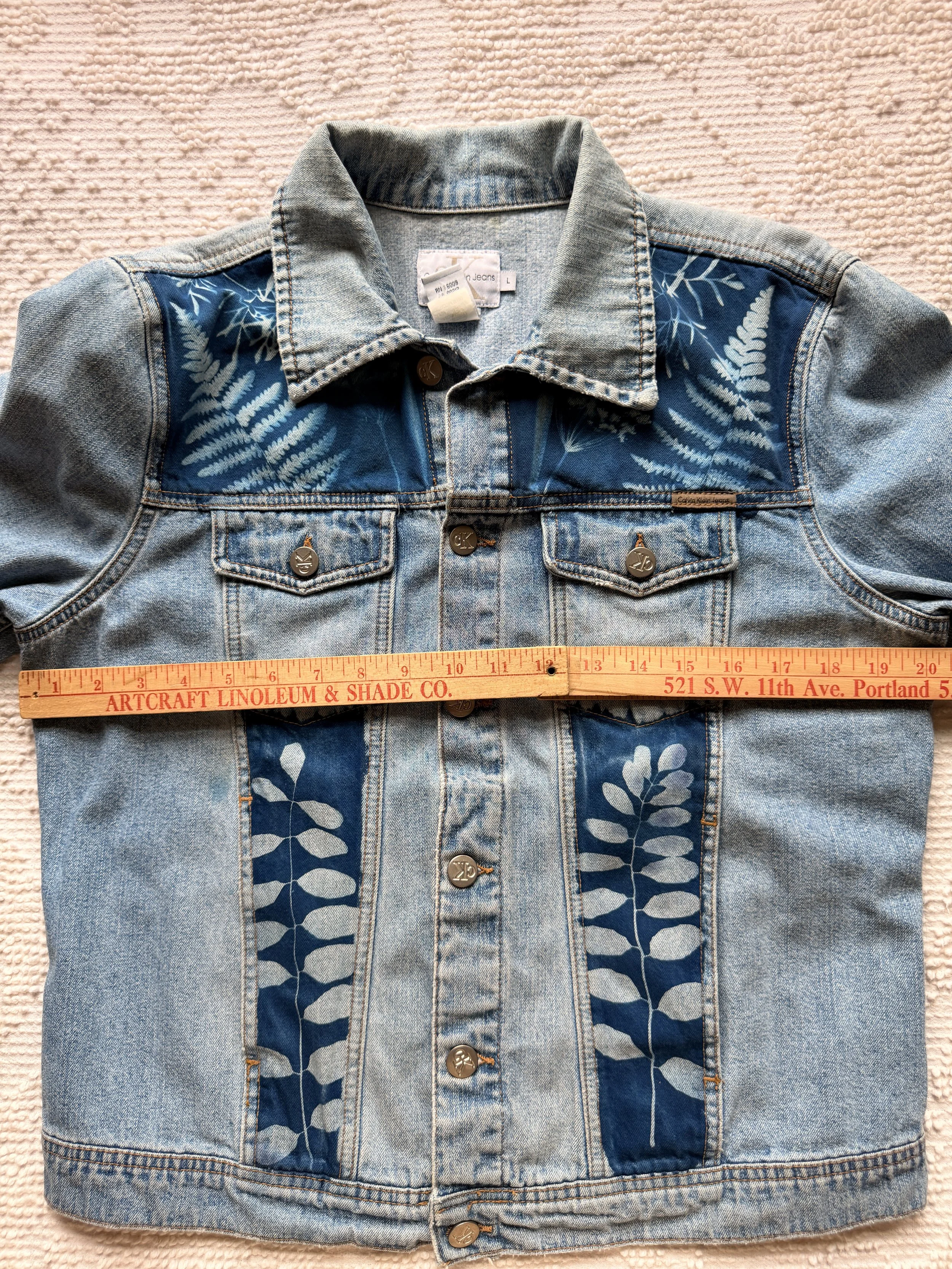
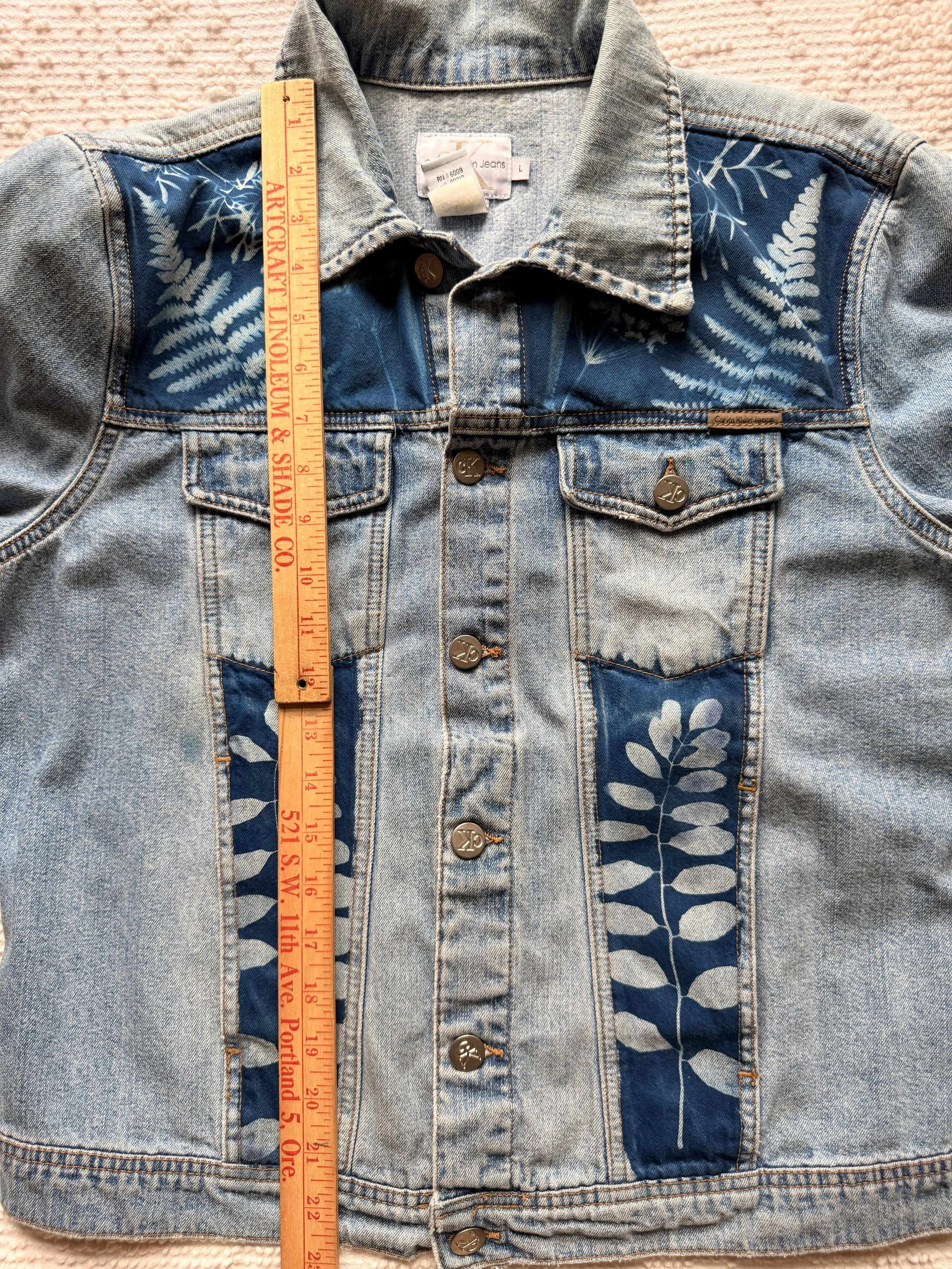
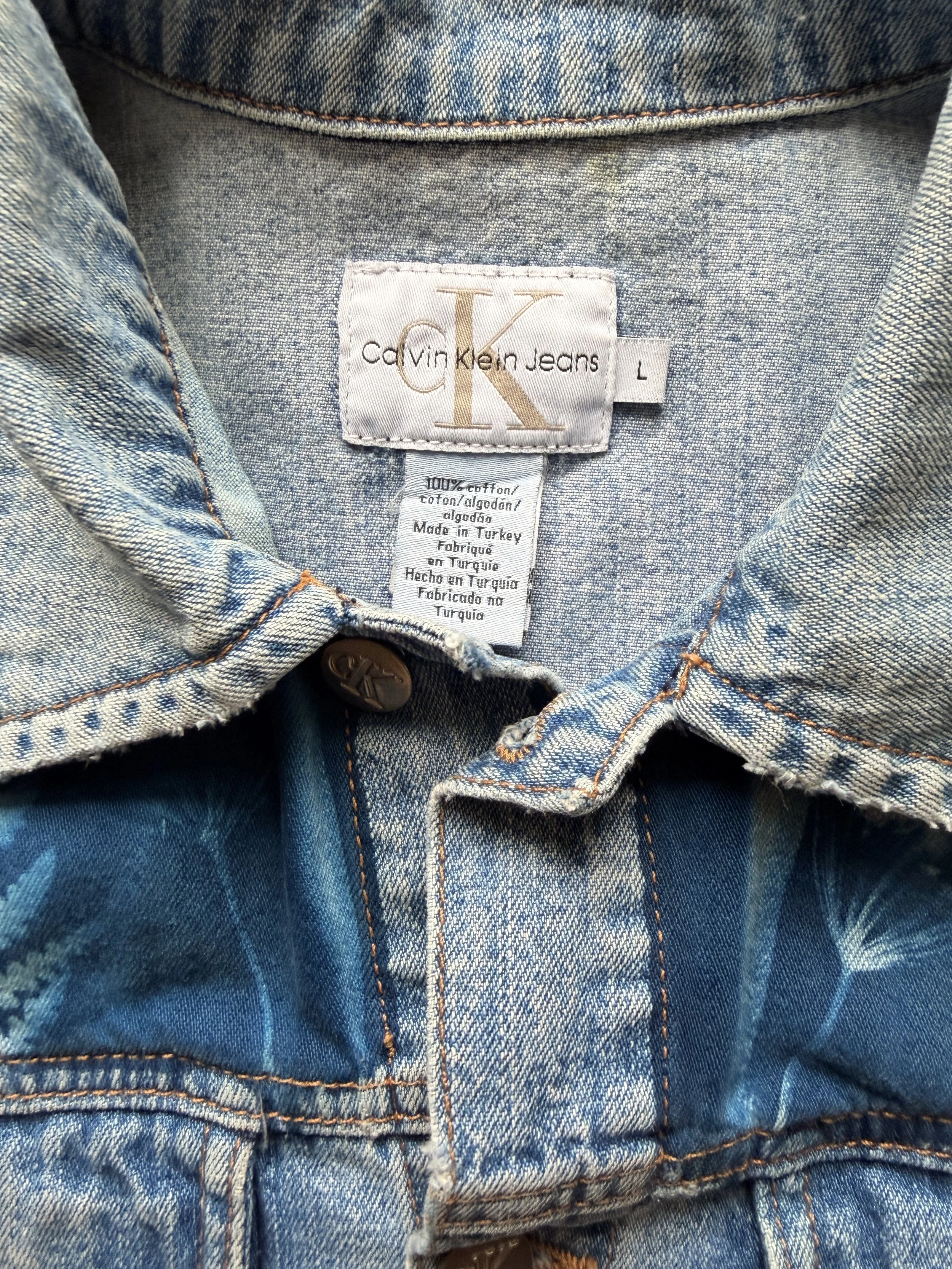
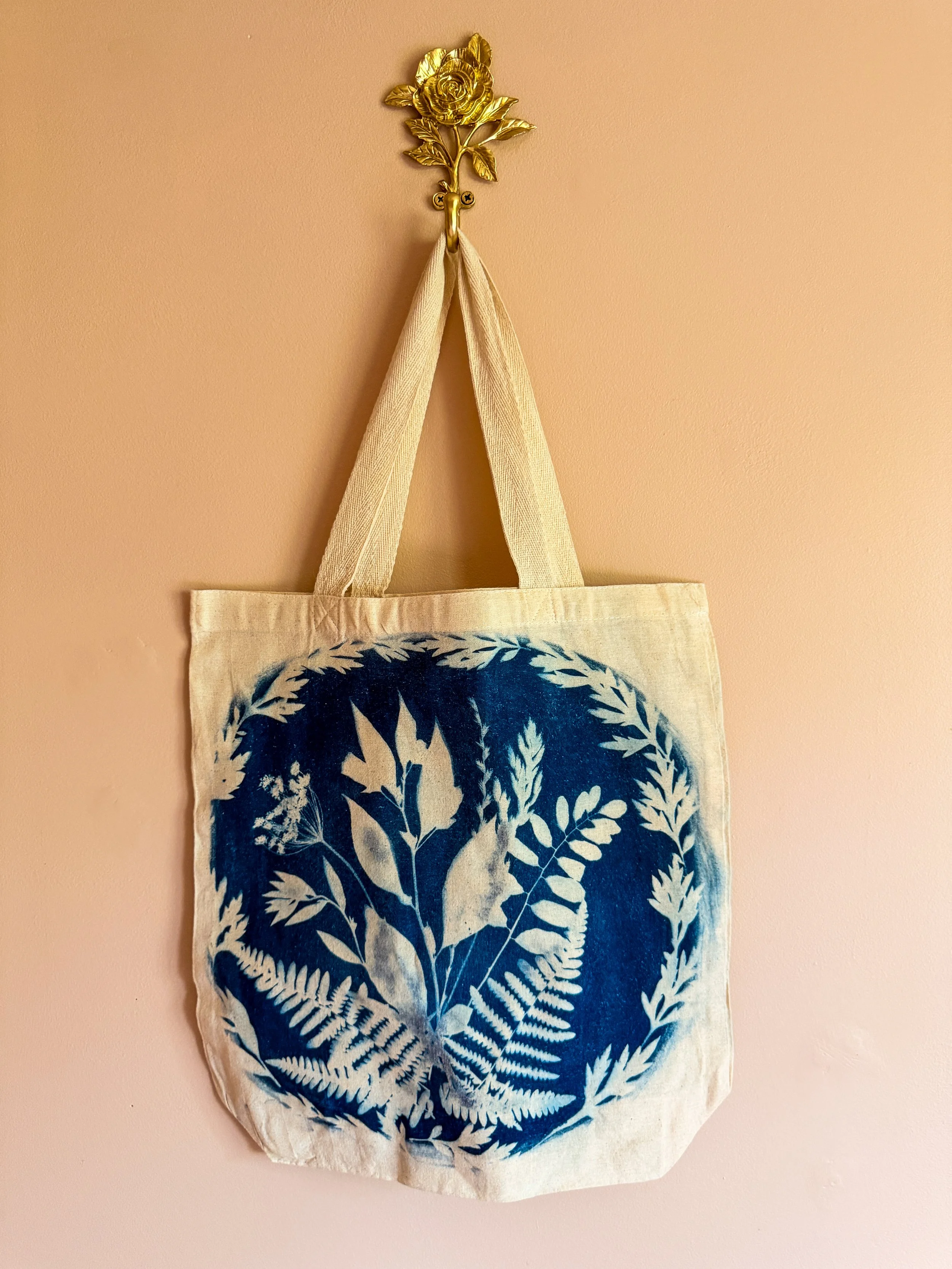
Cotton canvas tote bag jacket featuring belladonna, ferns and herbs in a mugwort wreath sun printed with cyanotype solution on 100% cotton bag. Measures approx. 13” x 13” not including handles.
Care:
Wash and dry normally. Sun prints are permanent. Items always last longer if handled gently.
The cyanotype process was invented in 1842 by Sir John Herschel, the same scientist who popularized terms like "photography," "positive," and "negative." He was experimenting with iron salts and sunlight and discovered that they produced a stable, vivid blue image made of the pigment known as Prussian blue (the first modern synthetic pigment).
Unlike early silver-based photography, cyanotype was inexpensive, relatively safe, and super simple: coat paper with chemicals, expose it to UV light, and wash it in water. The blue image appears almost magically during rinsing.
A year later, botanist and artist Anna Atkins recognized the artistic and scientific potential of the process.
She placed dried seaweeds and plants directly onto sensitized paper and exposed them to sunlight, creating detailed white silhouettes on deep blue backgrounds. In 1843 she published Photographs of British Algae: Cyanotype Impressions, widely considered the first book ever illustrated with photographs.
Because cyanotypes were cheap and easy to reproduce, architects and engineers adopted the process for copying technical drawings.
This is where the term blueprint comes from: white lines on a blue background produced using the cyanotype process. For decades, nearly every architectural plan and engineering drawing was a cyanotype.
By the mid-20th century, cyanotype was replaced with newer technology, but persists especially among alt-photographers and plant lovers.
Cotton canvas tote bag jacket featuring belladonna, ferns and herbs in a mugwort wreath sun printed with cyanotype solution on 100% cotton bag. Measures approx. 13” x 13” not including handles.
Care:
Wash and dry normally. Sun prints are permanent. Items always last longer if handled gently.
The cyanotype process was invented in 1842 by Sir John Herschel, the same scientist who popularized terms like "photography," "positive," and "negative." He was experimenting with iron salts and sunlight and discovered that they produced a stable, vivid blue image made of the pigment known as Prussian blue (the first modern synthetic pigment).
Unlike early silver-based photography, cyanotype was inexpensive, relatively safe, and super simple: coat paper with chemicals, expose it to UV light, and wash it in water. The blue image appears almost magically during rinsing.
A year later, botanist and artist Anna Atkins recognized the artistic and scientific potential of the process.
She placed dried seaweeds and plants directly onto sensitized paper and exposed them to sunlight, creating detailed white silhouettes on deep blue backgrounds. In 1843 she published Photographs of British Algae: Cyanotype Impressions, widely considered the first book ever illustrated with photographs.
Because cyanotypes were cheap and easy to reproduce, architects and engineers adopted the process for copying technical drawings.
This is where the term blueprint comes from: white lines on a blue background produced using the cyanotype process. For decades, nearly every architectural plan and engineering drawing was a cyanotype.
By the mid-20th century, cyanotype was replaced with newer technology, but persists especially among alt-photographers and plant lovers.